

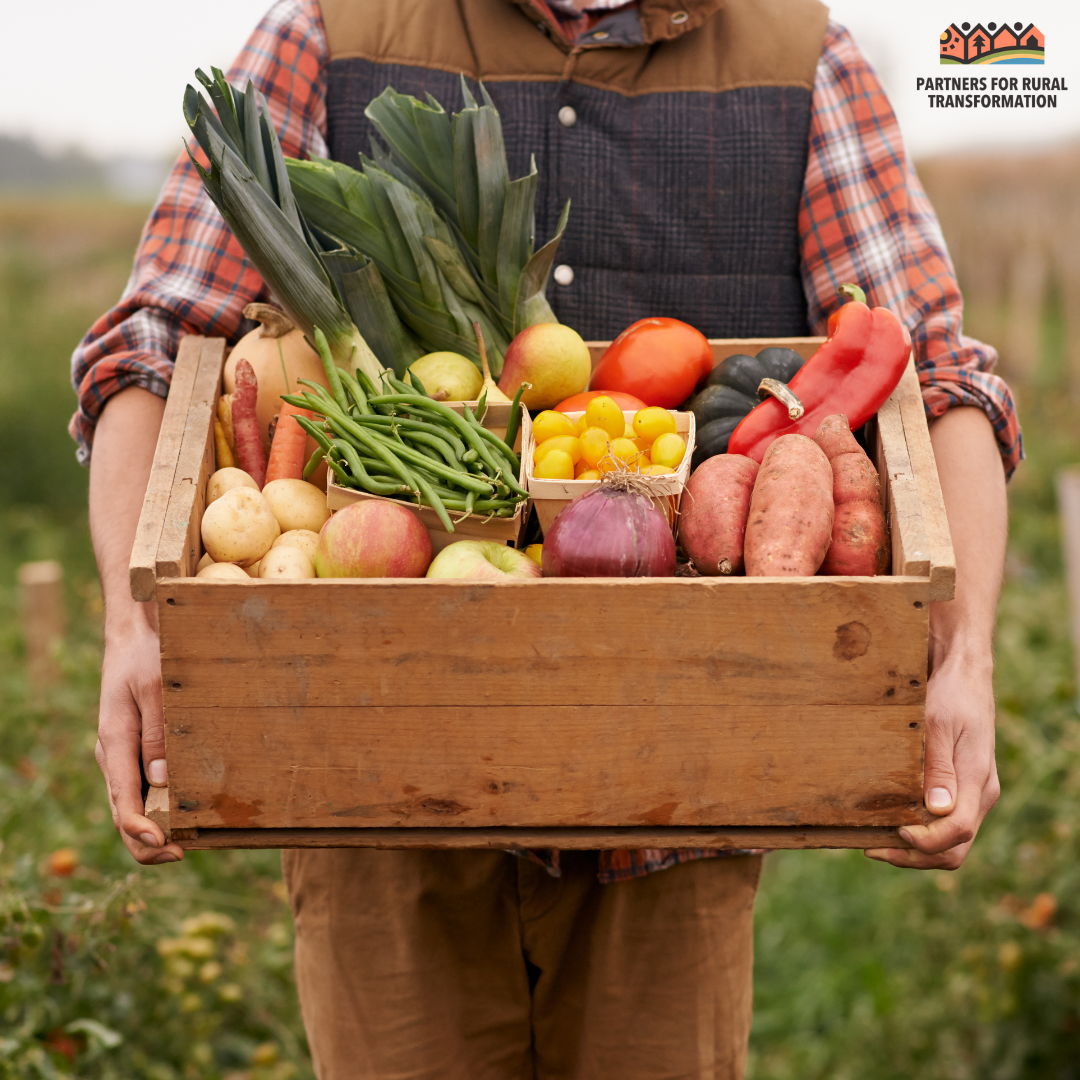
Rural America grows an overwhelming majority of this country’s food. However, these communities experience overwhelming levels of hunger and decreased access to healthy food. What happens when rural communities are overlooked and underfed? Communities take action with trusted partners like Community Development Financial Institutions (CDFIs), who use the CDFI Fund to tackle these challenges. The Partners for Rural Transformation (PRT) are using innovative programs and investments to make that change – one seed, one loan, and one meal at a time.
The Hidden Crisis: When the Land of Plenty Runs Dry
Rural localities are facing higher levels of food insecurity. The US’s overall food insecurity rate was 10.9% in 2019, but 12.5% in rural areas. 87% of the nation’s food-insecure counties are rural counties. Food deserts aren’t just empty shelves—they’re entire communities cut off from nourishment. These are communities with people living miles from the nearest grocery store, with only gas station snacks or fast food to feed themselves. In rural America,
- Lack of financing: Rural areas often lack traditional banks, and small farmers often do not fit conventional lending criteria.
- Lack of support: Remote locations, limited access to markets, lack of potable water for growing crops, rigid public funding uses, and several other factors contribute to farmers’ barriers to successfully scaling to larger markets while still serving local.
- Lack of opportunity: Little to no access to beneficial agricultural programs restricts rural farmers, especially farmers of color, leaving their expertise out of larger media stories about themselves.
Yet, where there’s hardship, there’s also hope.
Investing in our People: A New Recipe for Rural Economies
Rural-serving CDFIs can provide the flexible financial assistance that rural communities require and deserve. This funding goes hand in hand with the diversification of approaches that these communities express a need for—loans for farmers’ unique needs, the creation of grocery stores, the establishment of local farmers’ markets, and more.
The CDFI Fund, a federal agency that provides critical seed capital to CDFIs to serve their communities, collects data that makes CDFIs’ work and impact more transparent while also allowing CDFIs to leverage the funds from the CDFI Fund. CDFIs leverage, on average, $8 from private funders for every single public dollar, cementing the importance of the CDFI Fund to rural community development.
The CDFI Fund plays an important role in increasing access to healthy foods, which has been launched through the Healthy Food Financing Initiative. Between 2019 and 2021, the HFFI awarded 162 healthy food programs, 73 of which were rural. These rural grantees reported being able to lower grocery prices, impart nutritionist guidance for food programs, and further develop local farms (buying seeds, purchasing machinery, hiring labor, etc.). The CDFI Fund and rural-serving CDFIs are uniquely positioned to provide these services for rural Americans nationwide. And PRT is no different.
What Works Best: Funding the Food Solutions
The maps of the country’s poverty rate and the prevalence of food insecurity are nearly identical. We are comprised of six community organizations that understand that food fuels our bodies and our national and rural economies. Collectively, we create and support services addressing food provision and farm funding across rural America.
Hoopa Valley Tribe Creates Local Grocery Store through CDFI Support
Hoopa Valley, California’s natural landscape is rich with flowing rivers, dense forest, and teeming with fish and game. Yet, the Valley’s residents, for years, lived in a food desert. The nearest grocery store was just 12 miles away, but poor roadways and lack of public transportation eliminated access—Until PRT Partner Rural Community Assistance Corporation (RCAC) stepped in. In March 2019, the Hoopa Valley Tribe opened its first grocery store within walking distance of several of the Tribe’s neighborhoods and businesses. The grocery store was made possible through an innovative capital stack:
- $4.2 million loan from the local Arcata Economic Development Corporation*
- $1.5 million investment from the Hoopa Tribe
- $1.4 million participation loan from RCAC*
- $1.4 million loan from the Northern California Community Loan Fund*
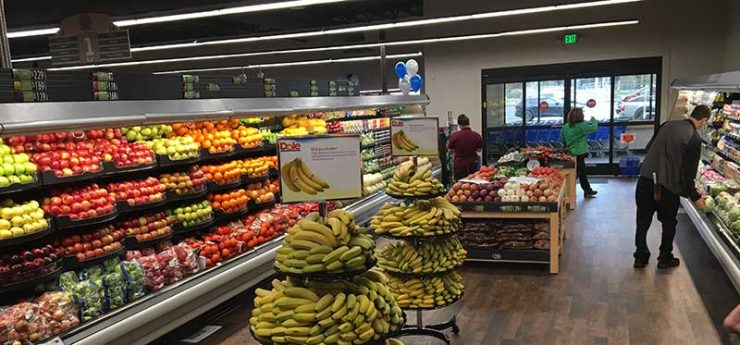
The three CDFI lenders* joined forces to give the Tribal residents access to healthy, affordable foods and a shopping center that would offer services like cooking and Tai Chi classes. The Hoopa Tribe held, emphasizing the importance of community voice and the power of choice.
Small Family Farm Gets a Lifeline from Rural CDFI
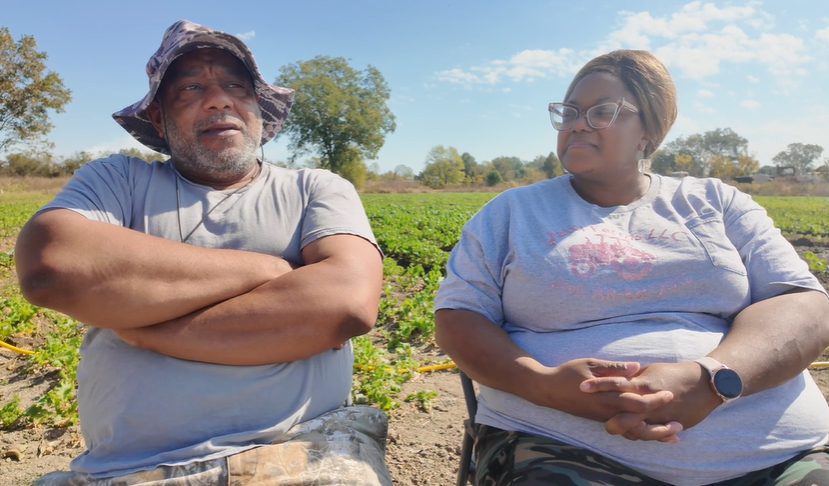
Another story of overcoming food insecurity was unfolding around 2,400 miles east in Turell, Arkansas. Ollie and Chloe Cox’s family-owned Mator Farms needed help. They began with just four acres of land, scaled up to seven acres, but then hit a roadblock when cash flow issues made it hard to keep up with growing demand. PRT Partner Communities Unlimited (CU)’s Lending and Healthy Foods teams were then on the scene. Chloe heard CU’s Candence Brooks speak at a small business symposium and knew that the rural CDFI was the right choice for them. In typical CDFI fashion, CU developed a loan for the Coxes, which then led to the creation of their Small Farm Lending Program (funded by the Sachs Foundation), designed to meet the needs of other small farmers across the other six states they serve.
“It’s a pool of money we can use for micro farmers—those who can’t necessarily go to the bank to get funding. Sometimes, farmers have unique challenges where they may not have the revenue or cash flow traditional loans require. Being able to offer this program helps fill that gap.”
— Candence Brooks, Economic Development Loan Officer at Communities Unlimited
The Coxes used their loan for labor support and new equipment, but their real joy was being able to continue to grow for their community. Their harvests support local food banks and schools, showing the importance of funding for rural farmers individually and how investment in them benefits entire communities and regions. Rural-serving CDFIs, like small farmers, go to creative lengths to provide for their communities. The opportunities to invest in projects like these exist across rural America.
CDFIs, like RCAC and CU, redefine expectations about rural investment. Instead of leaning on collateral, they lean on trust. Instead of focusing on credit scores, they focus on community impact. The need to invest in food and farmers is an undeniable must for rural-serving CDFIs, especially for PRT. Somewhere in rural America, a farmer plants seeds purchased with a loan that nobody else but a rural CDFI would provide. A grandmother is able to buy her grandchild clothes and toys from her veggies’ profits, being at her local farmer’s market, funded by The CDFI Fund’s Healthy Food Financing Initiative. This is how real change grows – from the seeds of innovative investment and a belief in better livelihoods. And hope, across rural America, is being harvested.